Bringing nature (and wellbeing!) into your school
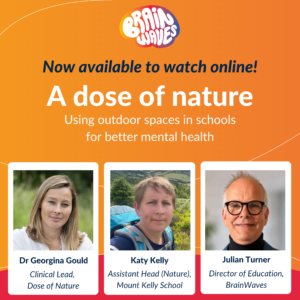
The BrainWaves webinar on “A dose of nature: Using outdoor spaces in schools for better student wellbeing” brought together two leading experts in nature-based interventions: Dr. Georgina Gould (Clinical Lead at Dose of Nature) and Katy Kelly (Assistant Head (Nature) at Mount Kelly School). Together, they shared fascinating insights and simple, scalable strategies for embedding nature into school environments.
The science: What happens when we step outside?
Many of us (including young people) intuitively feel that spending time outdoors is good for us, but understanding the underlying physiological and psychological mechanisms that happen to our minds and bodies when we step outside is crucial to young people in validating why nature connection is essential for learning and mental wellbeing.
1. Being outside calms the nervous system
When we step outside into natural surroundings, the parasympathetic nervous system is activated, reducing the body’s “fight, flight, or freeze” response. Adrenaline and cortisol levels drop, the heart rate variability settles, and blood pressure decreases.
When we are stuck in fight-or-flight mode, the prefrontal cortex—the part of the brain responsible for rational thinking, emotional regulation, and decision-making—simply shuts down to focus on the danger at hand. By settling the nervous system, nature re-engages the cortex, allowing us to think more clearly, focus, and regulate our emotions effectively.
This is particularly important when many of the “fight, flight, or freeze” responses in today’s society are not caused by genuine dangers, but rather the perceived stresses of modern day life.
2. Fractal patterns lead to wakeful relaxation
Nature is filled with fractals—self-repeating, complex geometric patterns found in things like leaf veins, tree branches, clouds, and river systems. Research demonstrates that viewing fractal patterns boosts alpha brain waves. Alpha waves induce a state known as wakeful relaxation: a unique mental zone where we feel calm and relaxed yet alert, inspired, and motivated.
3. Natural environments restore our attention and provide grounding and connection
According to Attention Restoration Theory, natural environments allow our directed attention (the focus required to read, complete coursework, or listen to a teacher) to rest and recover. Stepping outdoors restores cognitive capacity, reducing mental fatigue and “brain fog”.
Being in nature can also provide a sense of stability and permanence. For young people experiencing loneliness, stress, or emotional turbulence, natural spaces offer a safe, reliable anchor that fosters belonging and reduces feelings of isolation.
Practical ideas for the classroom and beyond
A key theme within the webinar highlights that you don’t need access to expansive national parks or vast green estates to cultivate nature connection. Small, intentional daily moments in nature can still make a substantial impact on wellbeing.
Suggested activities
- The wonder walk: Take a brief 5-minute walk around the school grounds and encourage students to find something that makes them pause and go “wow”.
- A rainbow walk: Challenge pupils to spot something in nature corresponding to every colour of the rainbow.
- Fractal scavenger hunts: Have students search for repeating patterns in tree bark, leaves, or frost on windows.
- Cloud or stargazing: Incorporate short, mindful outdoor pauses during transition periods or form time to observe the sky.
Urban and low-space solutions
- Micro-nature: Notice things like weeds pushing through pavement cracks, spiders in corners, or birds visiting rooftops.
- Bringing the outdoors in: Bring seasonal resources, like autumn leaves or pinecones, indoors for math activities, creative writing, or art projects.
- Window gardening: Grow sunflowers, herbs, or houseplants on windowsills inside classrooms to let students witness seeds transform into flowers.
- Leveraging tech: Use free identification apps like Merlin (for identifying bird calls) or Seek to gamify nature discovery responsibly.
Overcoming common school barriers
- Wet or cold weather clothing: Hold a Welly Amnesty! Ask your local community or parents to donate unused rain boots and coats. Mount Kelly collected over 100 pairs of wellies in just two days to outfit entire year groups.
- Teacher confidence: Start a Staff Nature Chat on Microsoft Teams or Slack. Encourage teachers, support staff, and caretakers to share photos, activities, and successes. Seeing colleagues take small steps normalizes outdoor teaching.
- Limited time / academic demands: Nature integration doesn’t require hour-long outdoor trips. Utilise 5-minute slots during form times, take one-on-one student check-ins on a short walk outside, or conduct brief brain breaks under the sky.
Key takeaways
Here are Georgina and Katy’s top tips for implementing nature education in your school:
- Shift the staff culture first: Build nature connection into the staff community before expecting full integration across the curriculum. When staff experience the benefits, it naturally filters down to students. And naturally, staff will feel the benefits too.
- Focus on connection, not just time spent outside: Simply being outdoors while distracted by a phone or worrying isn’t enough. Guide students to pay attention with their senses—listening to bird songs, observing patterns or feeling the wind.
- Just give it a try! Stepping out of traditional classroom routines can feel unfamiliar to many teachers at first, but both teachers and young people respond positively when given the opportunity to reconnect with the world under the sky.
And remember, by taking that first step into nature, you aren’t just stepping outside the classroom—you are opening up a lifelong pathway toward resilience, curiosity, and mental wellbeing for every young person in your care.